|
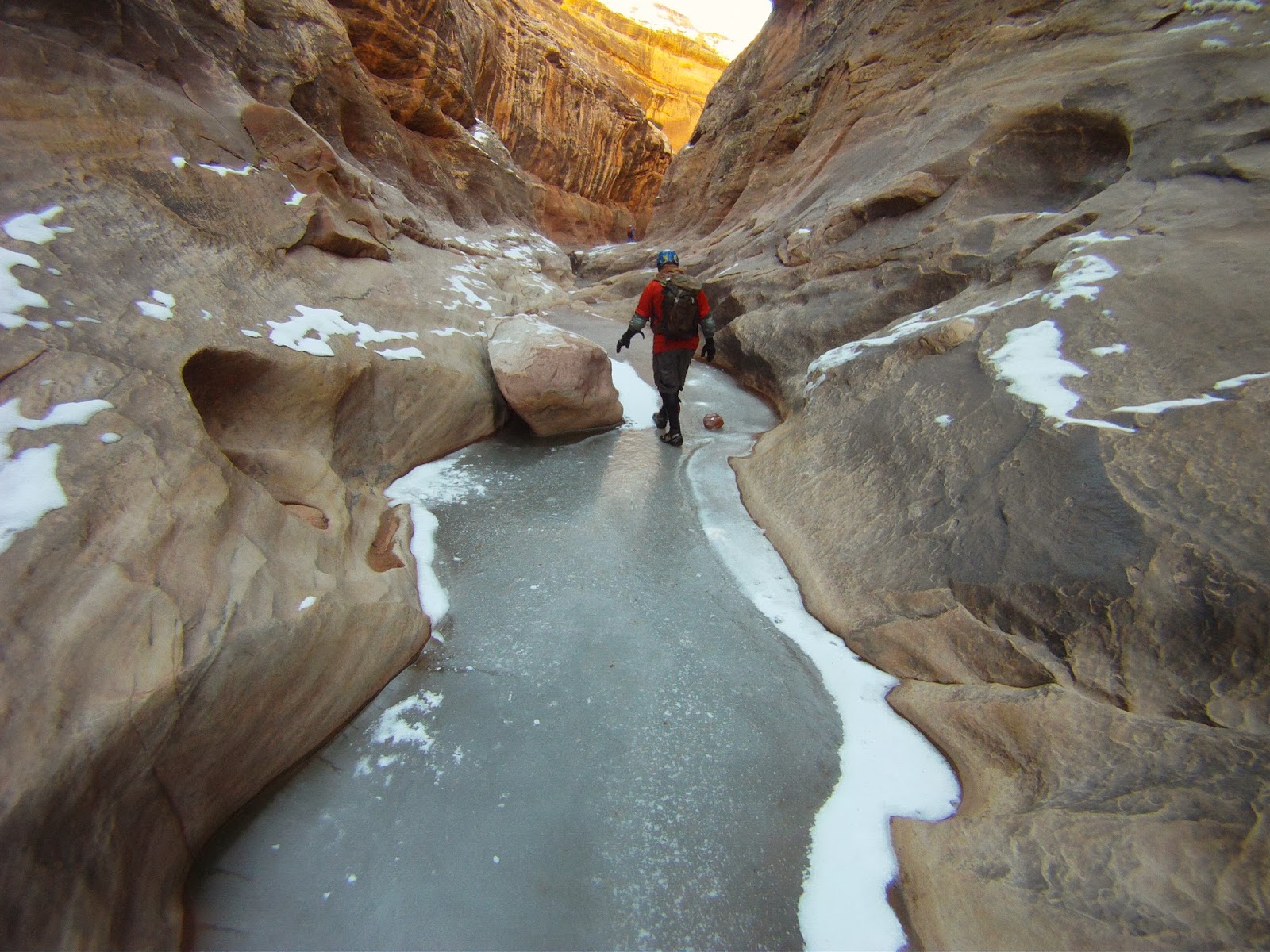
| Jared On Rappel in the Glen Canyon Recreational Area. Photo by: Ram |
With all this talk there is also talk of gear and equipment. I have recently heard groups looking for gear they wanted to start to plan for this year. While some of us are still anxiously awaiting
the return of Imlay Canyon Gear goods to gawk at, I thought this would be a
good time to go over my thoughts and ideas on Canyoneering gear and some do’s
and don’ts when buying. These thoughts
are geared mostly towards the new Canyoneer.
To participate in any hobby you need to have gear. Fishing needs a boat and poles, Mountain Biking
needs a bike and helmet, jeeping needs a jeep and so on. With hobbies comes money to be spent or
really good friends that have it all and you get to tag-a-long. With Rock Climbing and Canyoneering there is
no difference, you need gear from one source or another and to say the least,
some of this gear can mean the difference between life and death.
When I started into Canyoneering I gave up several hobbies to be able to
afford more of the gear I would need for this endeavor. I tagged along with a friend for a little bit
until I started procuring my own gear. I
made some mistakes in the beginning with some of my purchases and have gear
sitting that is no longer used. So what
does all this banter mean? Learn from
others, and pay attention. Try out different
items before settling. Take some courses where you can practice different techniques and use different items comparing
them side by side.
One of the questions I hear quite often that scares me to death is “Where
can I buy some used equipment from?”
Remember, some of this gear is designed to SAVE YOUR LIFE! Do you really want to trust used
equipment? Per manufactures
recommendations, some of it does have expiration dates. Used ropes should never be trusted for a
purchase. You never know what kind of
conditions that previous owner(s) kept them in or used them in etc. NEVER EVER BUY A USED ROPE!
Other gear is not as hard to question.
You can look at webbing on harnesses and wear on hardware, but still do
you really believe you know what kind of condition it is in. THIS WILL BE YOUR LIFE HANGING ON IT!
So as a help for those looking to get into the Canyoneering Gear buying
spirit, here is my personal list on equipment.
In order to help in the selection process I break it up into two
categories to give you a priority list to start shopping for. This list is based on travel through a
Technical (class 3 rated) Canyon. To get
through a Technical canyon you have gear that you NEED and gear that is
OPTIONAL or as I like to call it – COMFORT GEAR. Some people are going to disagree with me, by
all means, please leave me some comments below and let’s discuss it. So here we go –
Needed Items:
 Rope: Canyoneering uses a static
or low stretch/elongation rope to rappel on. Any load rated rappelling rope
will work, however the Canyoneering ropes do perform better in their respective
environment. Canyoneering ropes are made to better withstand the rigors of
being drug through sand and water and constant abrasion over rock and edges. The most common sizes are 8-9mm diameter and lengths are gonna be double the length of the longest rappel in the canyon. Most generally a 200 ft. rope is a good starter rope that will get you through a lot of really good canyons. Popular brands include: Imlay Canyon Gear, BlueWater, Sterling and Petzl.
Harness: You will need a seat
harness. Harnesses must be rated to hold
your weight under load and not tear or come apart. Canyoneering has some
specific harnesses made for the sport that have some PVC plastic seat
protectors built into it or these are also available as an add on.
You are constantly sliding and scraping your dairy air in the canyon and
you will eventually wear out the seat of your harness and pants and everything
else back there. Plan on replacing your harness every so often due to the
abuse it gets. For this reason people
often go really cheap to replace often, or really expensive to have them last a
little longer. Popular brands are: Black Diamond, Singing Rock and Petzl.
 Locking Carabiner: Locking carabiners are needed to attach the rope to your
harness. While any brand of climbing rated carabiner will work, I prefer
a locking carabiner that is of the twist or screw lock variety. This requires
you to manually lock the carabiner each time you use it. I recommend
staying away from the auto locking carabiners.
In Canyoneering with the sand and grit that we are swimming through, this
blocks up your auto lock, and could render it unsafe. Screw locks are generally easier to keep
cleaned out and with the manual function you are forced to check them each time
you use it to confirm it is locked. Popular styles and brands are HMS
sized pear shaped carabiners: Petzl, Black Diamond, Rock Exotica, Cypher.
 Rappel Device/Descender: A device to attach to the rope to control your descent
speed will be needed. Generally a rappel/belay device is used for this.
While any device designed for this purpose can be used, there are a
couple that are designed specifically for Canyoneering so as to be rigged and
de-rigged in a multitude of conditions such as hydraulic water flows.
Popular devices include: Sterling ATS, Rock Exotica Totem, Petzl
Pirana.
Tubular Webbing: 1" Tubular Webbing is used to rig your anchors to
attach your rope to. When purchasing
your webbing from a climbing shop, consider purchasing subdued colors so as to
keep the aesthetics of the canyon appealing.
Quick Links/Rappel Rings: Rappel Rings and Quick Links (also called Rapides), are
attached to the webbing on the anchor to attach your rope. We never
attach our rope directly to the webbing as the nylon on nylon/polyester
combination can create a lot of heat if movement is created and this can melt
through the webbing causing anchor failure. Sizes used for the links are
big enough to put your rope through with some room for movement. Sizes
are generally 8mm or 5/16" sizes. The links should be of a quality
make and rating to hold your weight and then some. Brands include: Maillon, Cypher and Kong
Optional/Comfort Items: Items that make the canyon a lot more fun, enjoyable, and safe.
 Helmet: The helmet really
isn't necessary to get through a technical slot canyon. It does make it
safer and for this reason I don't ever recommend going into a technical canyon
without one. Helmets protect not only from dropped rocks and debris, but
from hitting your head on slips, trips, falls and fumbles. On many occasions I have stood up in a canyon
only to find a rock ledge protruding out just enough for my helmet to smack
it. Helmets are any climbing rated
helmet. Popular brands include: Black Diamond and Petzl.
 Shoes: Hiking shoes are decent
to carry you many places. Canyoneering
shoes are however phenomenal. The most popular shoe is the Canyoneer made by
5.10 (Five Ten). Their sticky rubber soles grip wet rock and canyon walls like no
other shoe out there. They are however known by some to be one of the
most uncomfortable shoes to wear and they are a bit pricy for a pair of shoes.
Other brands include: LaSportiva
 Packs: Backpacks are
necessary to carry your equipment in and out of the canyons. They will
get beat up and trashed if they aren't of quality make and let's face it, after
so long the good ones will eventually get worn out as well. Popular
brands: Imlay Canyon Gear, Metolius.
Dry Bags and Wetsuits: If you are going to be in canyons with
lots of water and swimming you will need some thermal protection and a way to
keep your spare clothes and lunches dry.
I recommend staying away from dry suits.
They are pricy and once they get a whole in them your thermal protection
is gone. A wetsuit continues to provide thermal
protection throughout, even after a hole is scraped into it. Popular Wetsuit
brands include: Henderson, NeoSport, Body Glove, NRS and Camaro.
 Rope Bags Very
useful to organize and carry your ropes.
They make packing and stowing the rope simpler and quicker when you are
in a canyon. Popular brands include: Imlay Canyon Gear, Metolious, Black
Diamond, Canyon Werks.
Cows Tails: These
are made up of webbing and/or material with multiple tie-in points. These are used to tether yourself to the
anchor on a ledge, hook into ascending equipment, or hang your pack from when
stemming. Popular brands include: Black
Diamond, CMI, Petzl and Rescue Systems Inc.
Rappelling Gloves along with Knee and Elbow Pads.
Headlamp:
Always good for early starts, late exits, deep dark canyons and
emergencies.
First Aid and Emergency Kit along with a Knife and Emergency Satellite Beacons(SPOT).
 Ascenders and an Ascending System for Emergencies and Potholes.
GPS, Maps and Compass.
Extra food and water.
In a later edition, maybe we will discuss extra gear above and beyond this list that is needed for more advanced canyon explorations - Class 4 Canyons.